
Written by Michael Challenor
There is something slightly crazy about choosing to build a medtech company.
You have to navigate complex science and engineering, protect intellectual property, align regulatory pathways with clinical programs, plan for manufacturing and reimbursement, and raise funding, often all at once. Then you keep going despite knowing that almost every part will take longer and cost more than you originally expected.
At LSI Asia in Singapore, I spoke about this reality and why choosing the right partners is critical to successfully navigating the medtech journey.
LSI Asia marked an important milestone for Innovate Medtech. For the first time, we had our own booth at the conference. We also sponsored and hosted the IMT Pitch-Off, and I took to the stage to share the Innovate Medtech founder story and explain why we built the company. Across the event, we reconnected with clients, collaborators and friends, and met founders, investors and medtech companies from around the world.
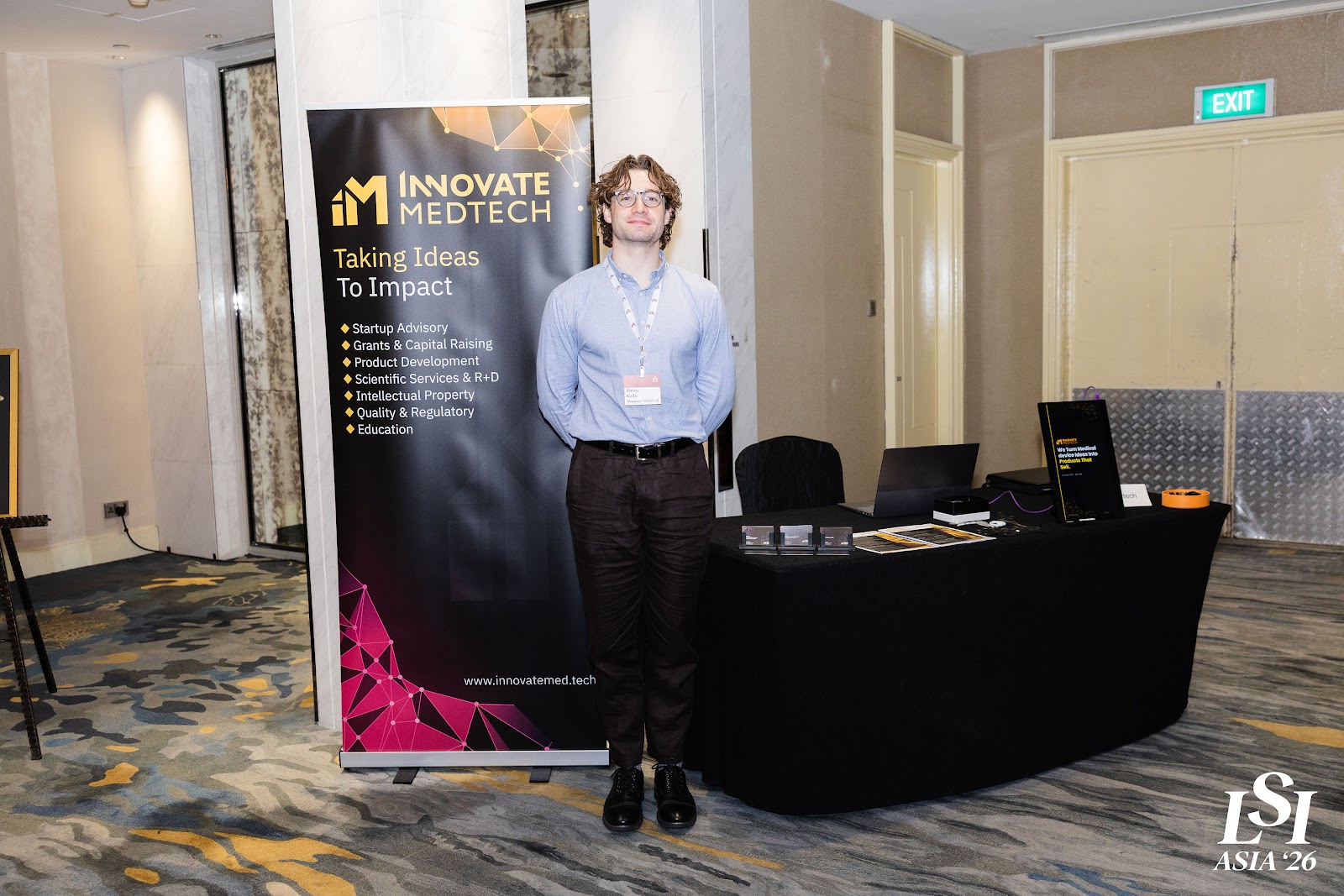
It was the most involved we have been in an LSI conference so far, and a useful moment to step back and reflect on what we are building.
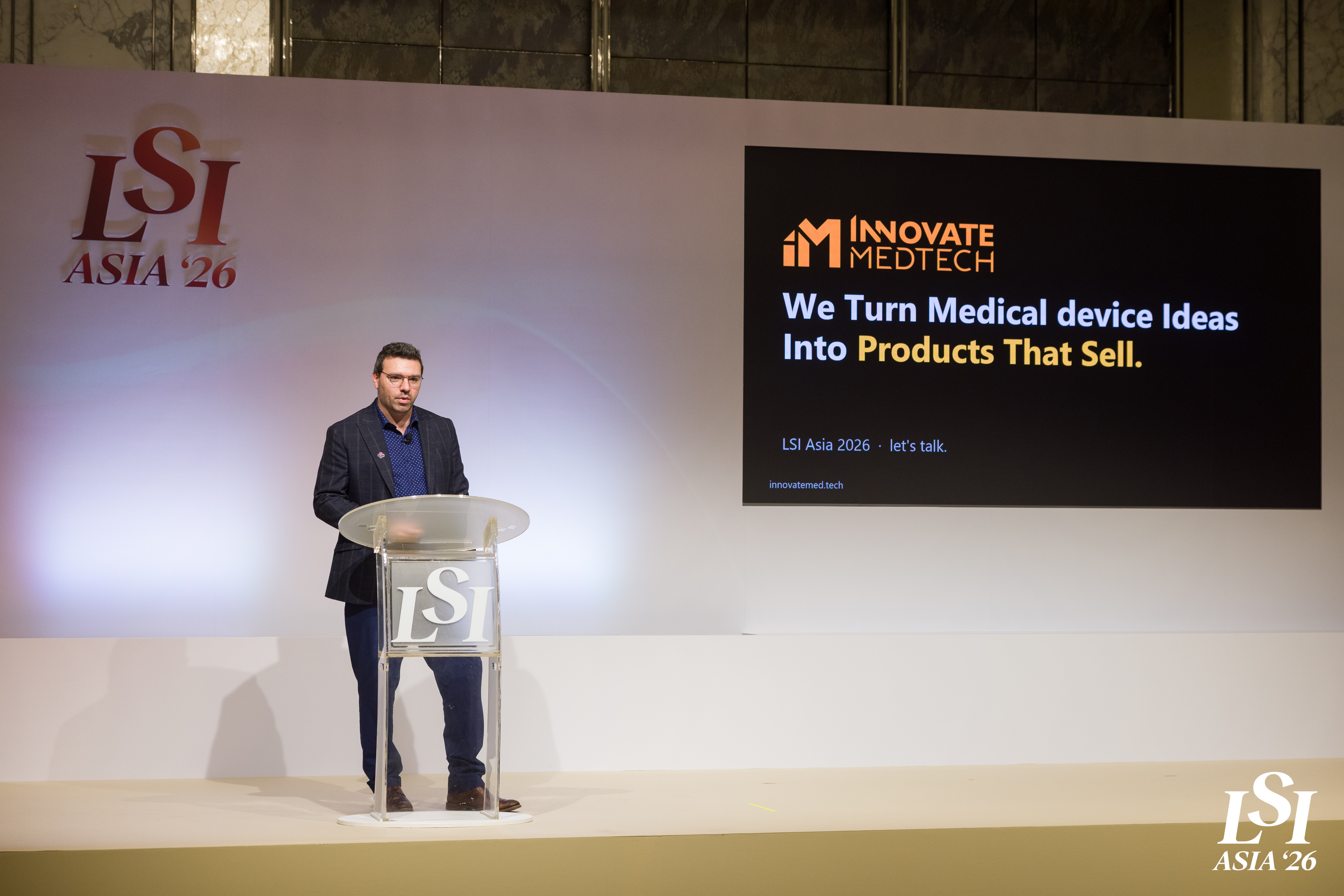
WHY I BUILT INNOVATE MEDTECH
My path into this business was not especially linear. I went from scientist, to medtech founder, to consultant and product development partner.
Before Innovate Medtech, I spent approximately eight years as Co-founder, Director and CTO of VitalTrace, a Perth-based deep-tech medtech company developing continuous lactate sensing technology for intrapartum fetal monitoring.
That journey taught me a great deal, sometimes the expensive way.
One of the biggest lessons was simple: building medtech is hard, and having the right people around you makes a huge difference.
I also learnt that your mileage may vary with the advice you get. As a founder, you receive advice from advisors, consultants, investors, lawyers, engineers, scientists and people who have seen something vaguely similar before. Some of it is excellent. Some of it is not right for your company. Some of it can send you down a very expensive rabbit hole.
Ultimately, founders still have to work out which advice is good, which is bad and which is appropriate for the particular stage, technology and company in front of them.
That experience was a major reason I founded Innovate Medtech.
“We built Innovate Medtech to be the kind of partner I wish I had as a medtech founder.”
Today, Innovate Medtech is a boutique medtech innovation studio and product development company headquartered in Perth, Western Australia, supported by a global team of employees, contractors, advisors and specialist partners.
We pride ourselves on being founder-friendly because we are medtech founders ourselves. We understand that founders rarely arrive with a perfectly defined brief and a neat list of engineering requirements. Often, the first job is working out what actually needs to be done.
Our simplest description of how we work is: We help identify what founders need done, and then we help do it.
WATCH OUR LSI ASIA PRESENTATION
In this approximately 10-minute presentation, I talk about my journey through VitalTrace and into Innovate Medtech, what that experience taught me about the support founders need, and how those lessons shaped the company we are building today.
If you are building a medtech company, or have spent time in the trenches with one, some of this will probably feel familiar to you.
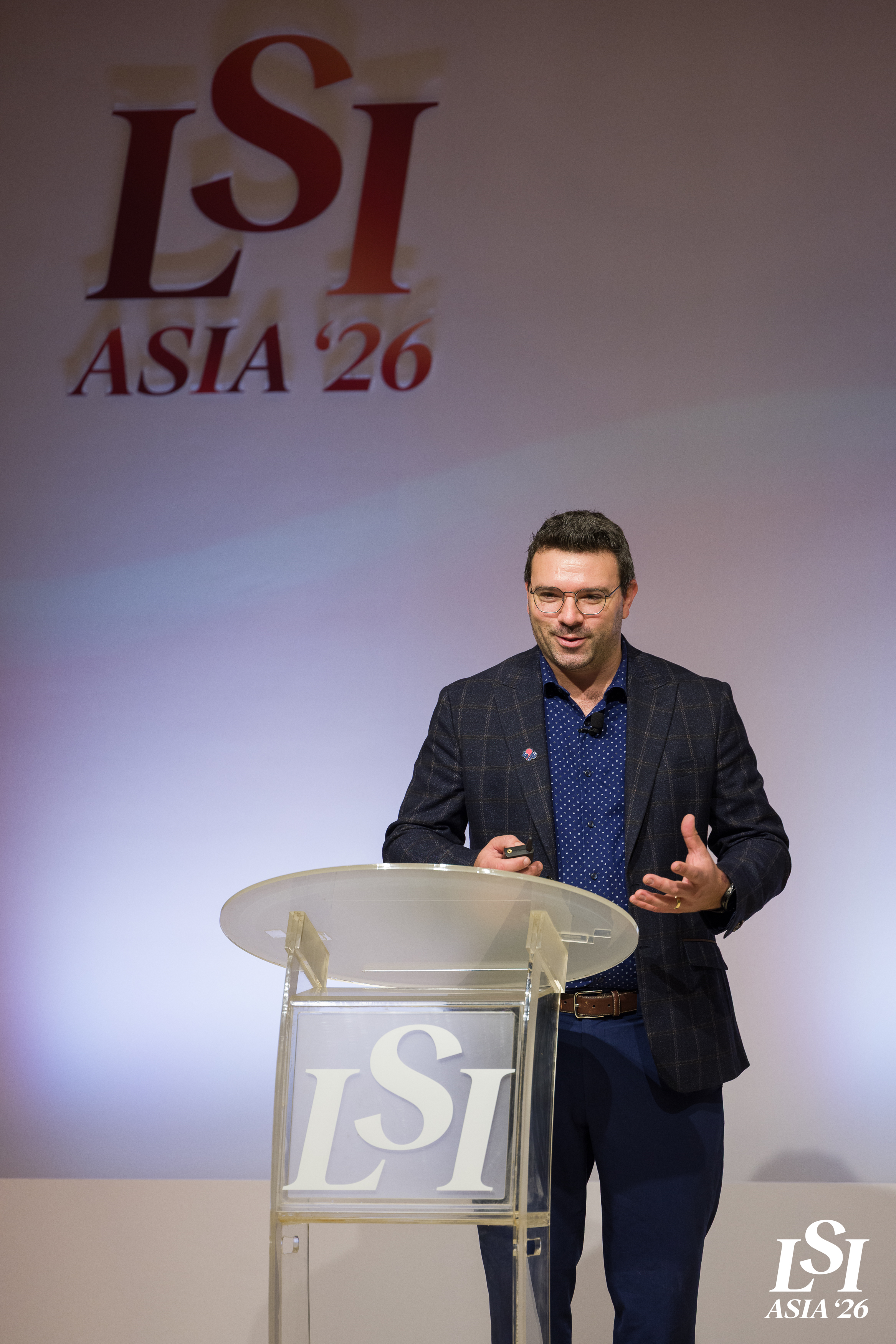
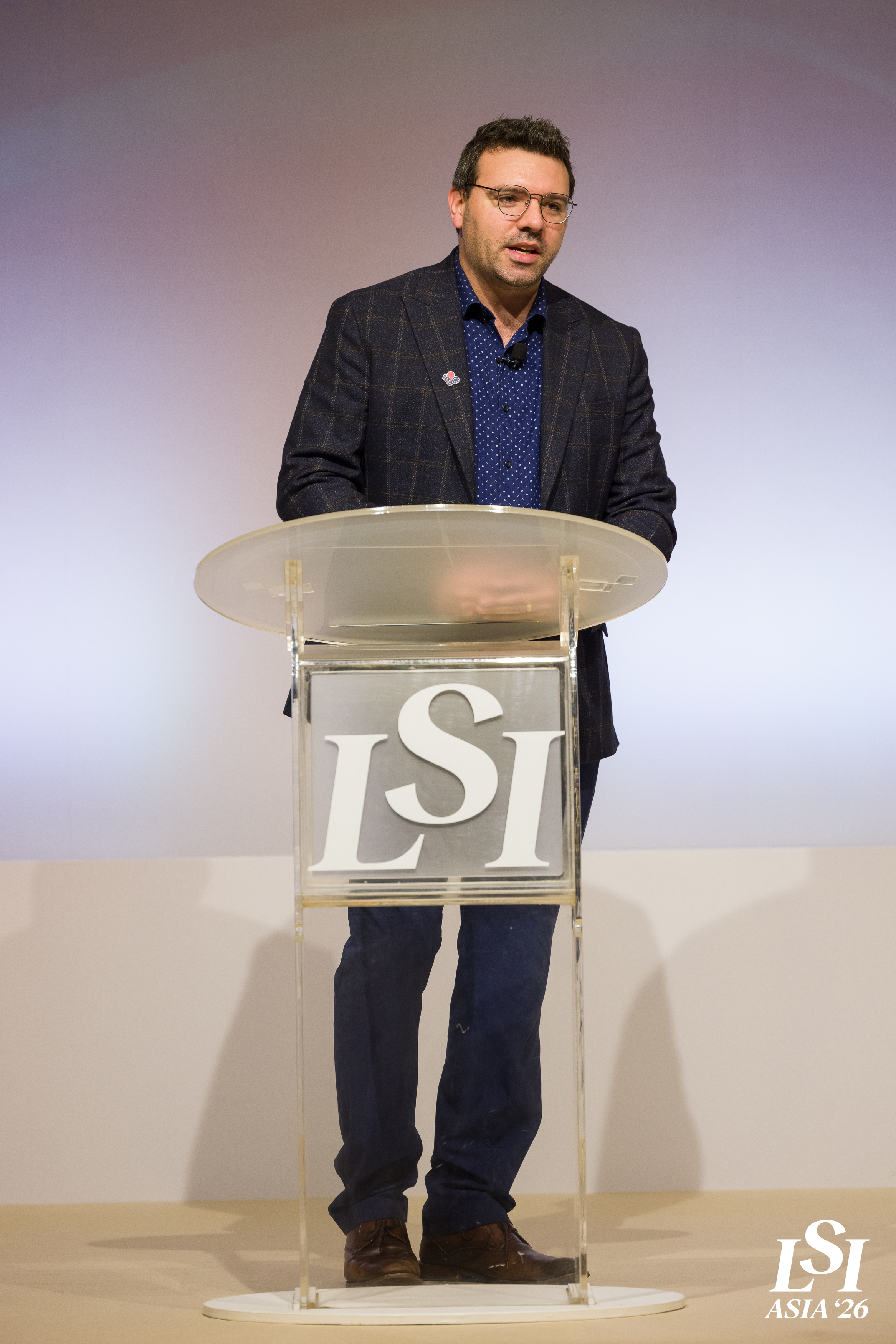
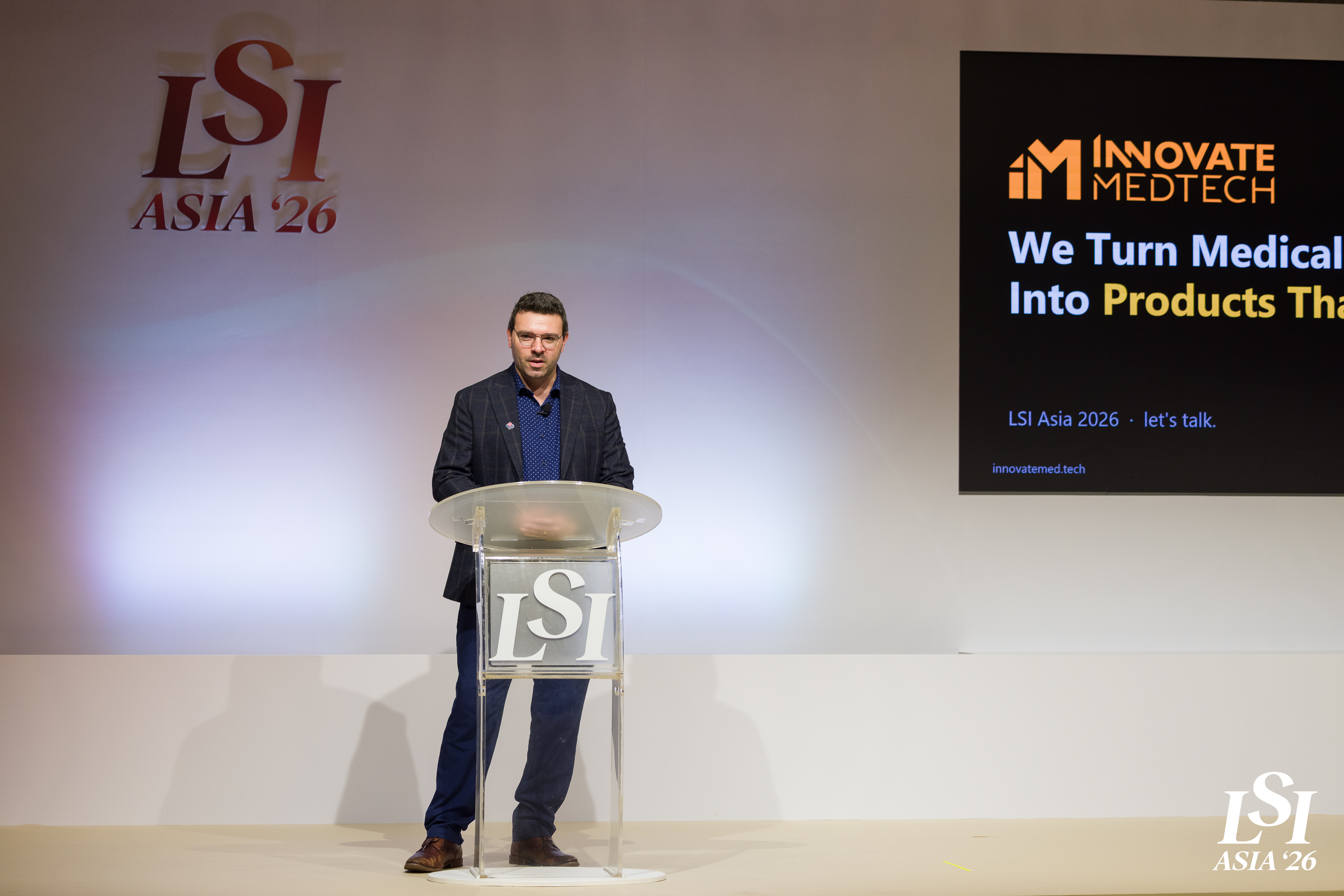
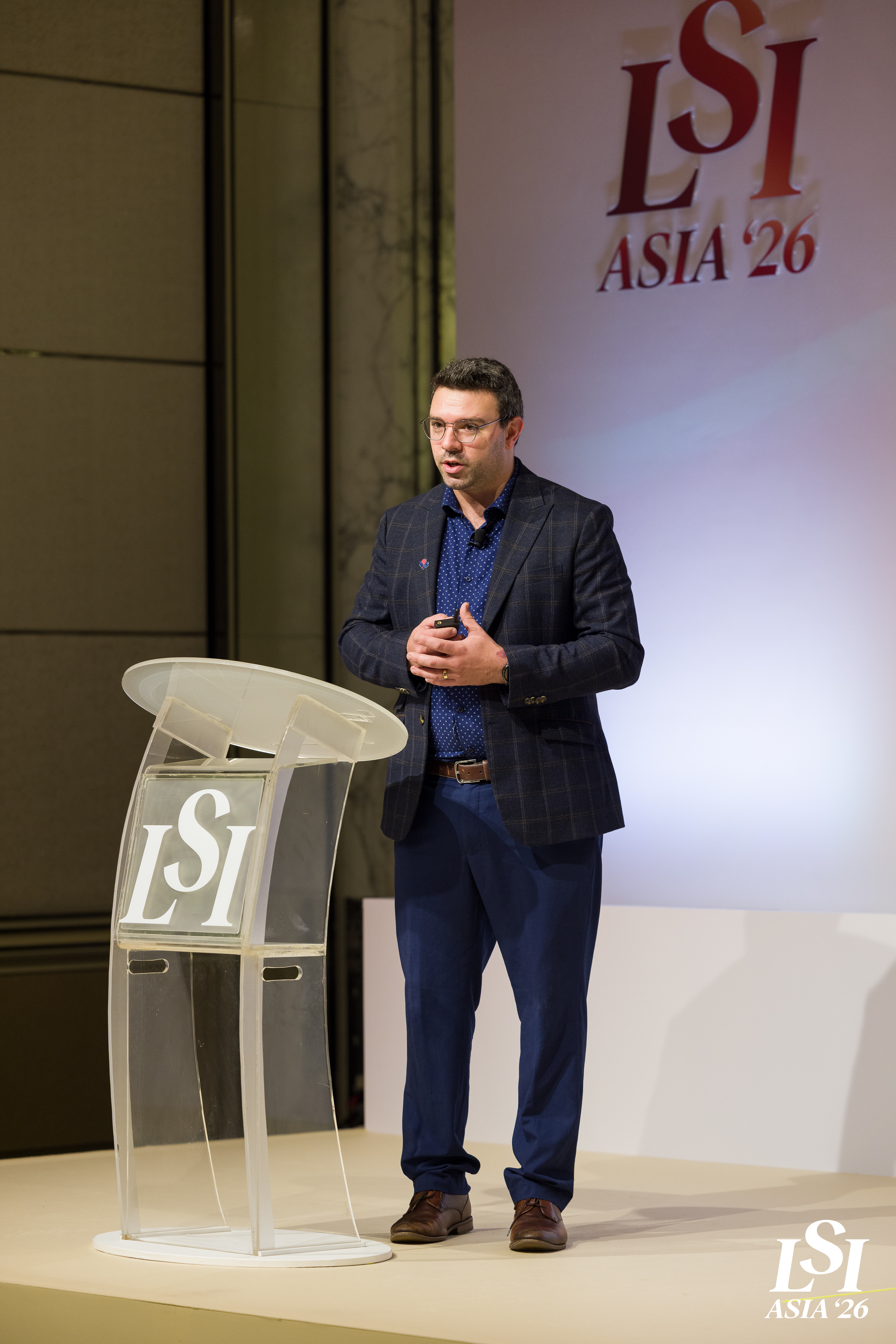
Michael Challenor presenting Innovate Medtech’s founder story at LSI Asia ’26, sharing lessons from the medtech founder journey and explaining how Innovate Medtech supports founders from strategy through product development.
HOW WE WORK WITH FOUNDERS

Innovate Medtech is deliberately focused on medtech and health technologies. We are not a generalist product development consultancy that happens to take on the occasional medical device.
We are scientists as well as engineers. I genuinely believe that applying the scientific method to engineering helps validate the hypothesis of whether a particular technology is the most appropriate solution–problem fit. A technically impressive solution is not automatically the right solution, and it is much better to challenge that assumption early than discover it after years of development.
Our team works at the intersection of medtech and materials, with particular technical depth in materials science, nanomaterials, chemistry, biosensors, electrochemistry, wearables and sensor manufacturing. But our role is broader than solving an isolated technical problem. We can support early strategic and scientific decisions and, where appropriate, become an end-to-end design and development partner.
We also try to harmonise IP strategy and product development in parallel. Patents and product development should not live in completely separate universes. Decisions about what you build affect what may be protectable, just as a good IP strategy should influence how the technology develops.
Over the longer term, we want to help build stronger Australian medtech manufacturing and CDMO capabilities so that more companies can move from an idea to a manufacturable product with the right specialist support around them.
Read more about our Research & Development and Prototyping capabilities.
THE INVESTORS HAD TO PITCH FOR ONCE: INSIDE THE IMT PITCH-OFF AT LSI ASIA
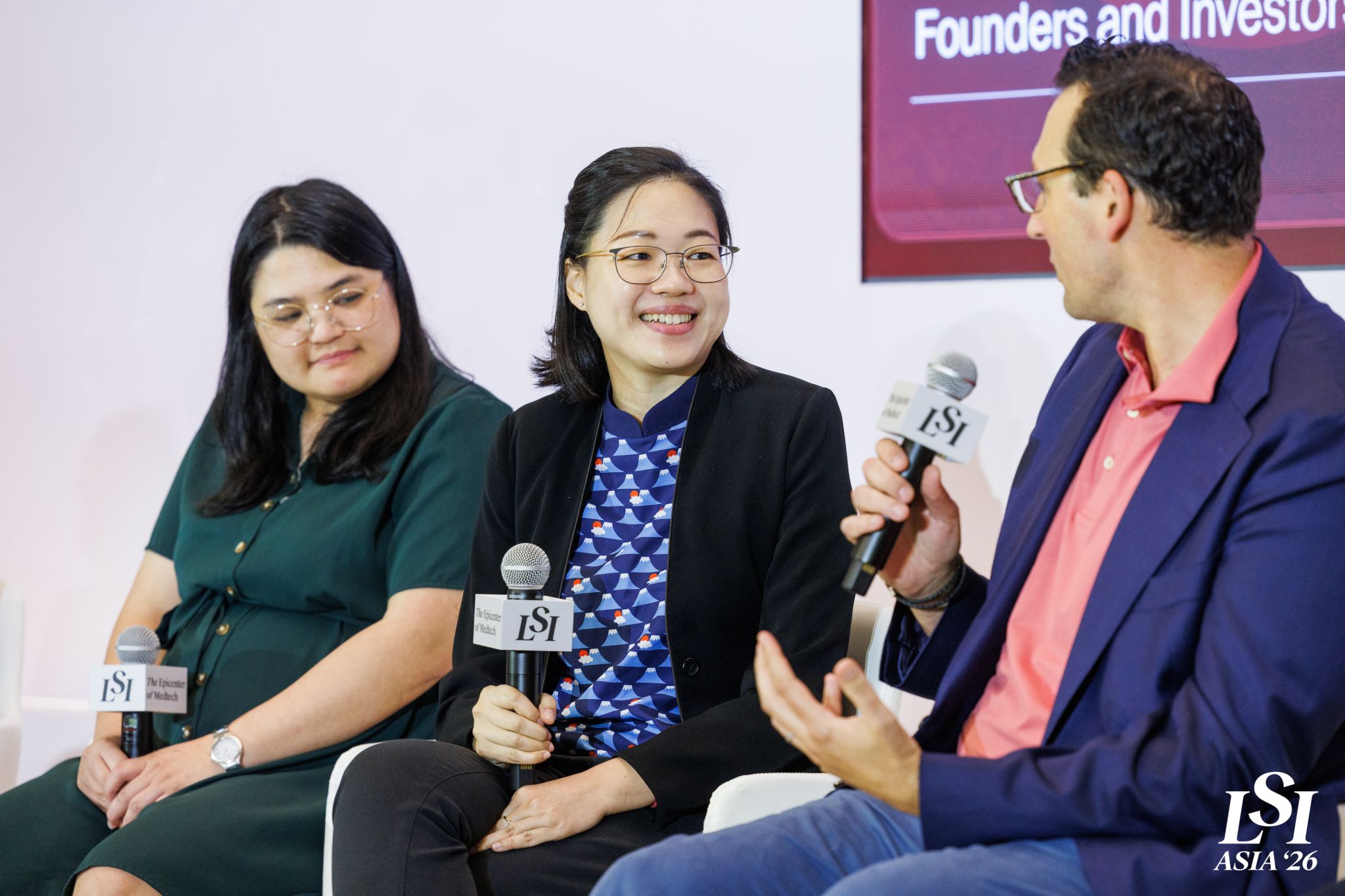
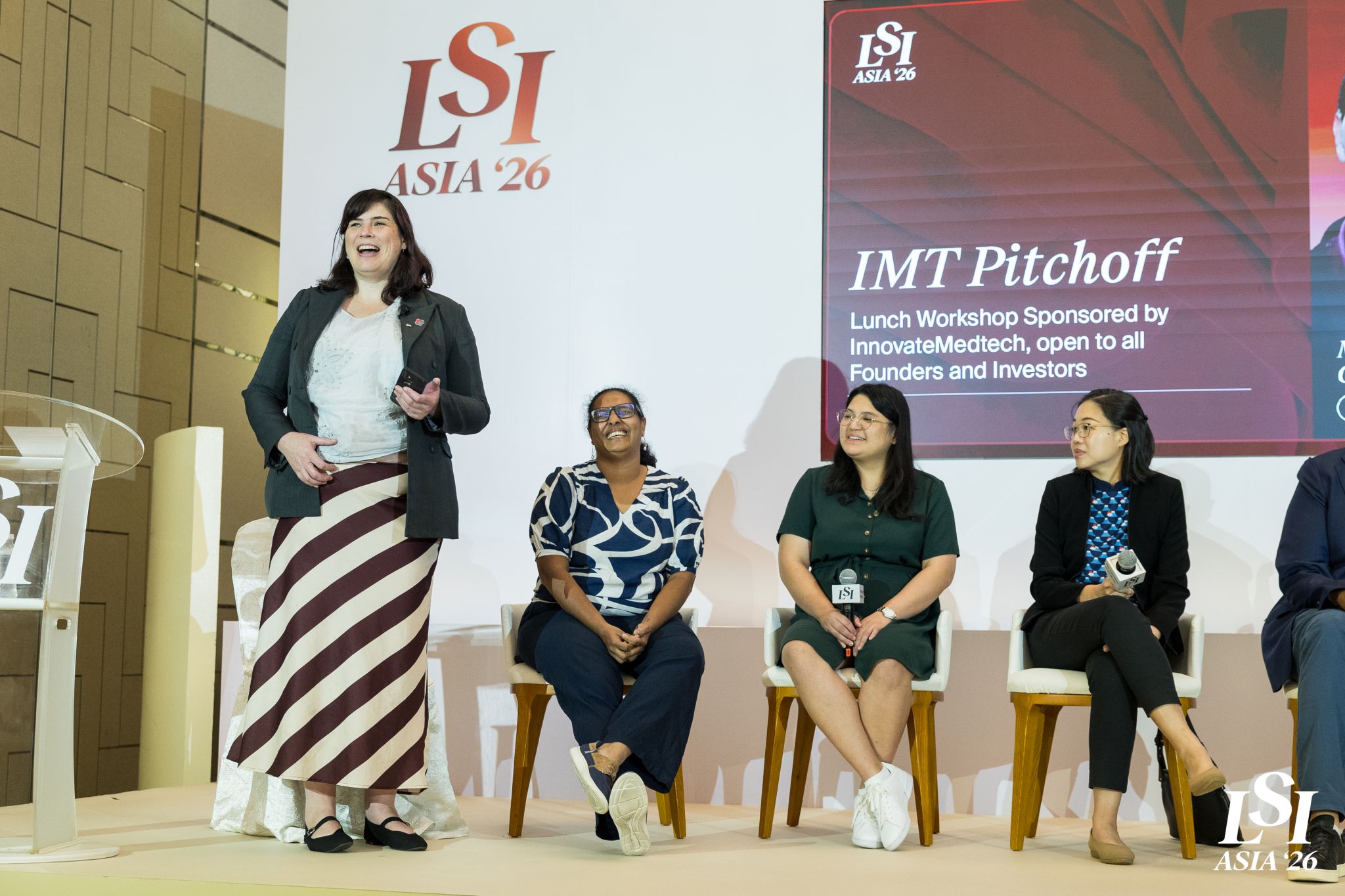
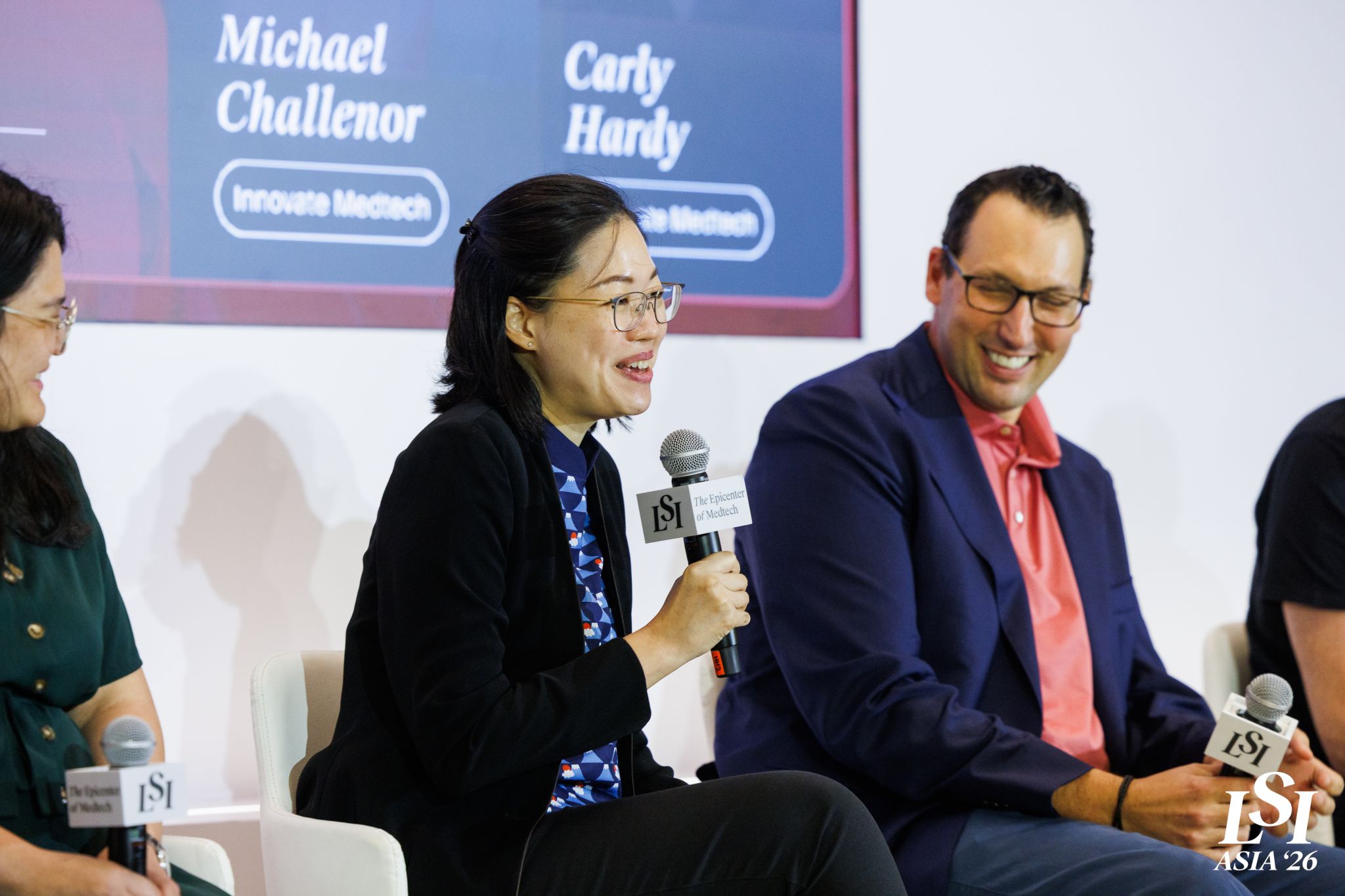
At a partnering conference, the rhythm rarely changes. Founders pitch, investors judge, and everyone knows their role. So at LSI Asia this year, we decided to flip it.
Henry Peck described the concept as a “steel cage match”. It was definitely a little edgy for the usual conference vibe, but we pushed ahead anyway.
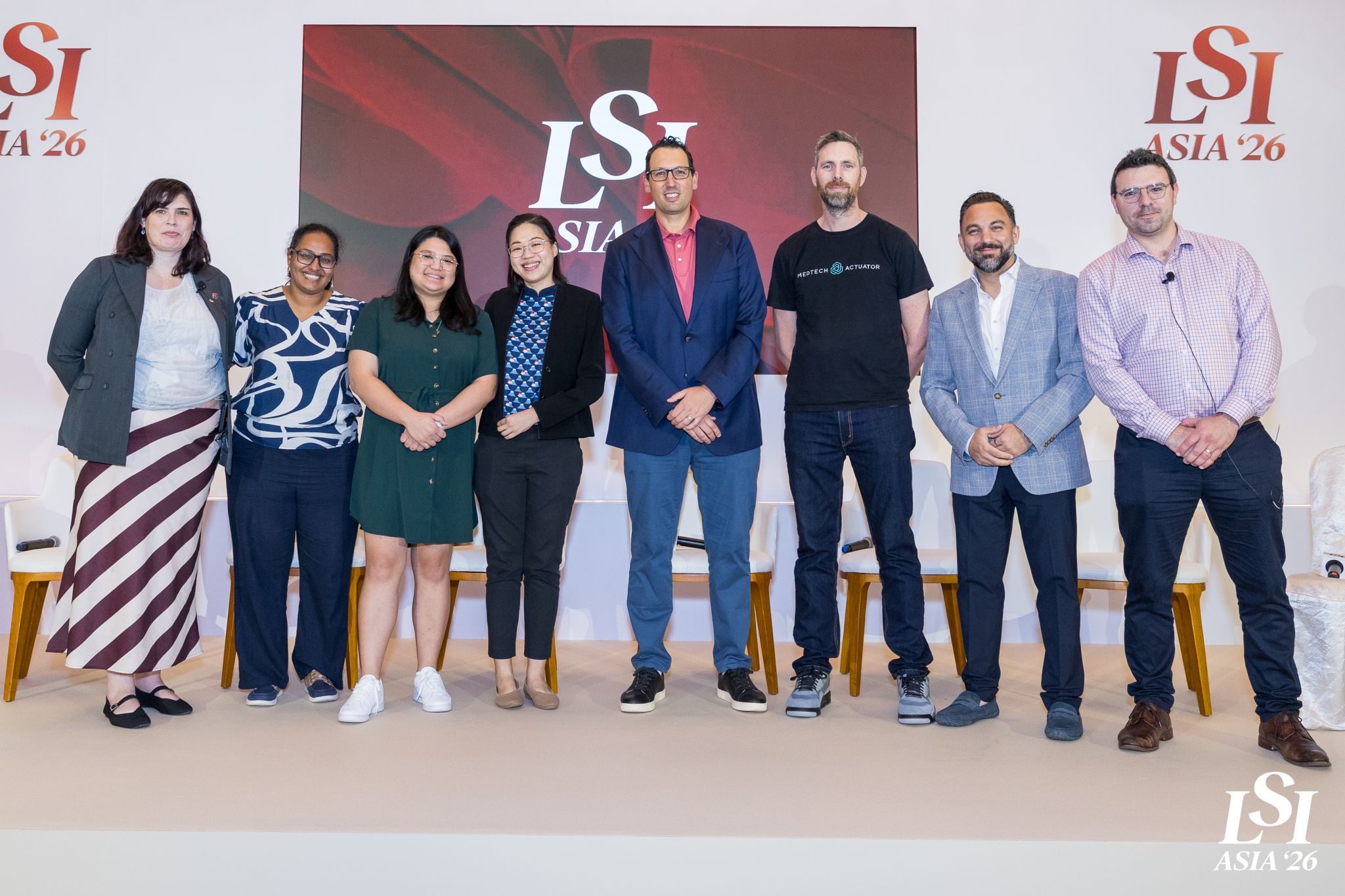
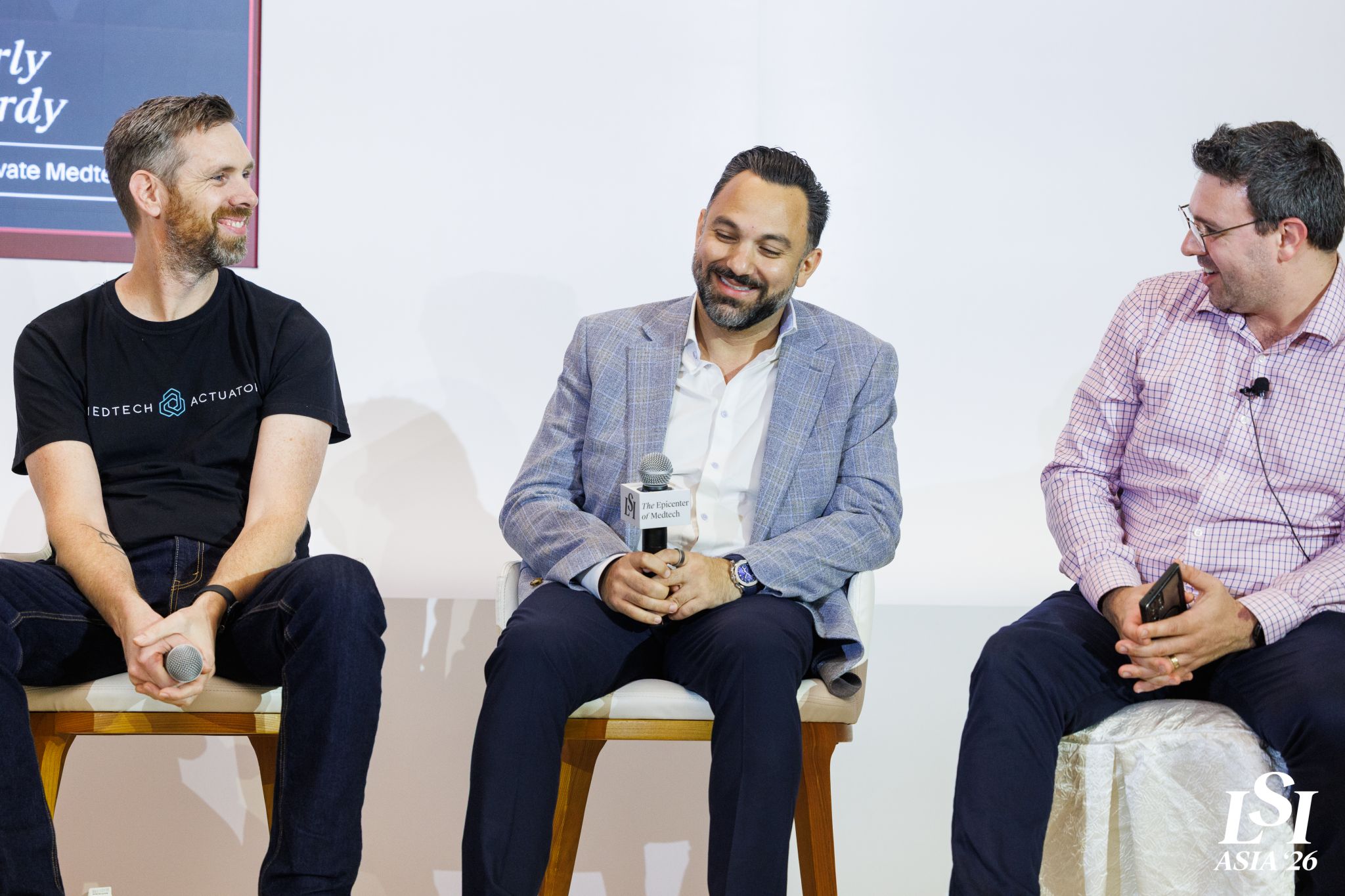
The IMT Pitch-Off, sponsored by Innovate Medtech, put three founders and three investors on the same stage over lunch. Three minutes each, one microphone, no slides. The founders had to sell the room on why they were the best deal at the conference. The investors had to sell the room on why their fund was the money you actually want. Then the other side got two minutes to put them on the spot.
It turns out investors are a lot more comfortable asking the hard questions than answering them. Watching the tables turn was exactly as entertaining as we hoped, and the founders did not go easy on them.
The room decided the winners. Everyone scanned a QR code, cast their votes, and the results were announced live before anyone left.
On the investor side, Ramin Mousavi from Novomed Partners took it out. Among the founders, Alur Saguinsin from One Kidney won the room.
Huge thanks to everyone who put themselves on the mic: our founders Rachel Hong of Meracle Health, Preeti Mohan of Kinara Vision, and our winner Alur Saguinsin of One Kidney; and our investors Joshua Ehrenfeld, Matthew Frith of Synthesis Capital, and our winner Ramin Mousavi of Novomed Partners. And thanks to the audience for turning up, voting, and making it what it was.
Thank you as well to the LSI team for being so open-minded and supportive in helping us make it happen.
The premise was a bit of fun, but there was a real point underneath it. An investment is a value exchange. It’s a long-term partnership. And the best partnerships happen when both sides are choosing each other. For one lunch, everyone got to be on the other side of the table, and that’s a perspective worth having.
If you missed it, keep an eye out for the next one.
THE PEOPLE ARE STILL THE POINT
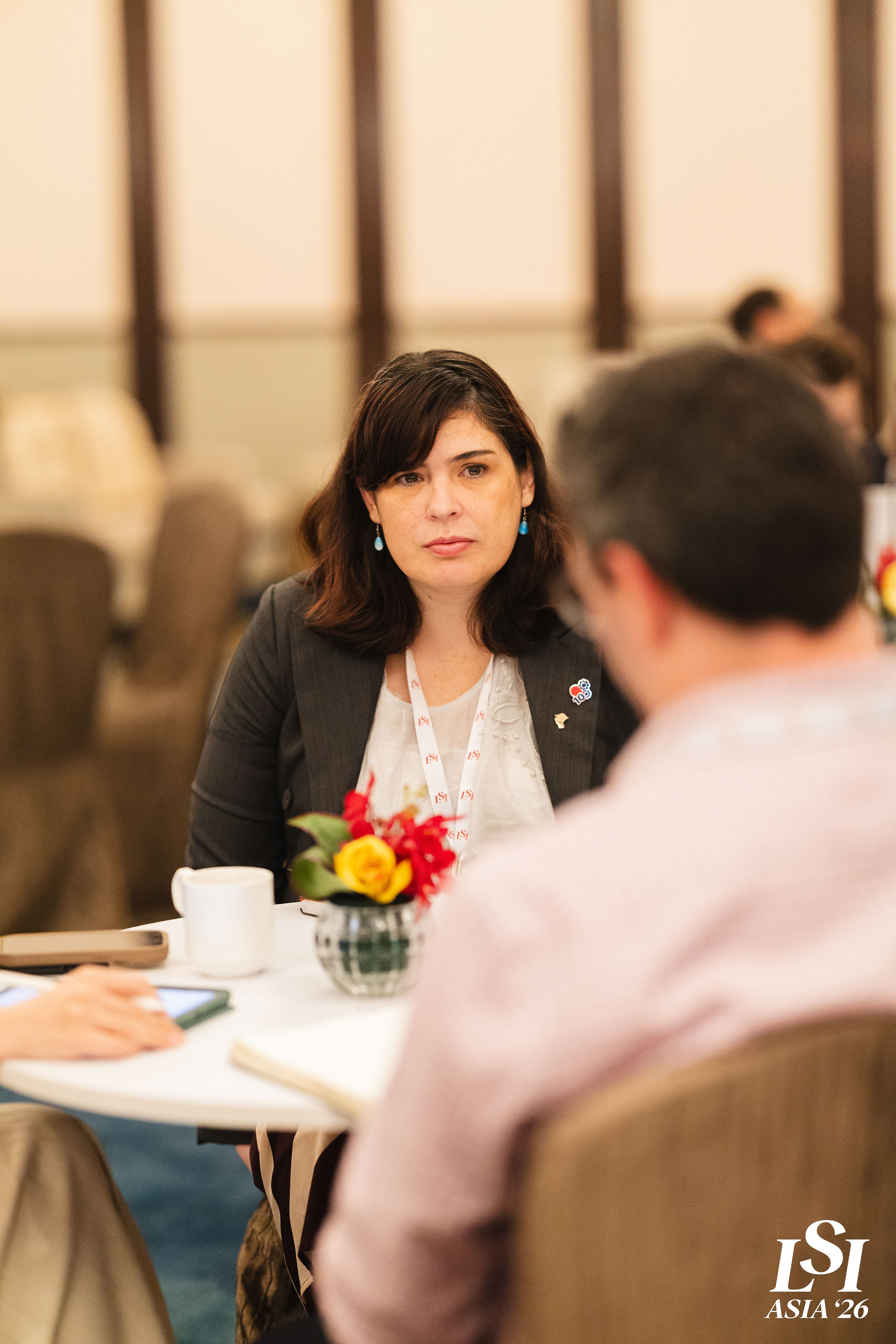
Conferences can become a blur of booths, meetings, lanyards and conversations held while trying to remember where the next room is. But their real value is the people.
At LSI Asia, we caught up with old clients, collaborators and friends, including Maxine Lam and Preeti Mohan, and met many new founders, investors and medtech companies.
For a business built around collaboration, those relationships matter. Medtech is too difficult and too multidisciplinary to build in isolation. The best work happens when people with different expertise can be honest about what they know, what they do not know and what needs to happen next.
MORE MOMENTS FROM LSI ASIA
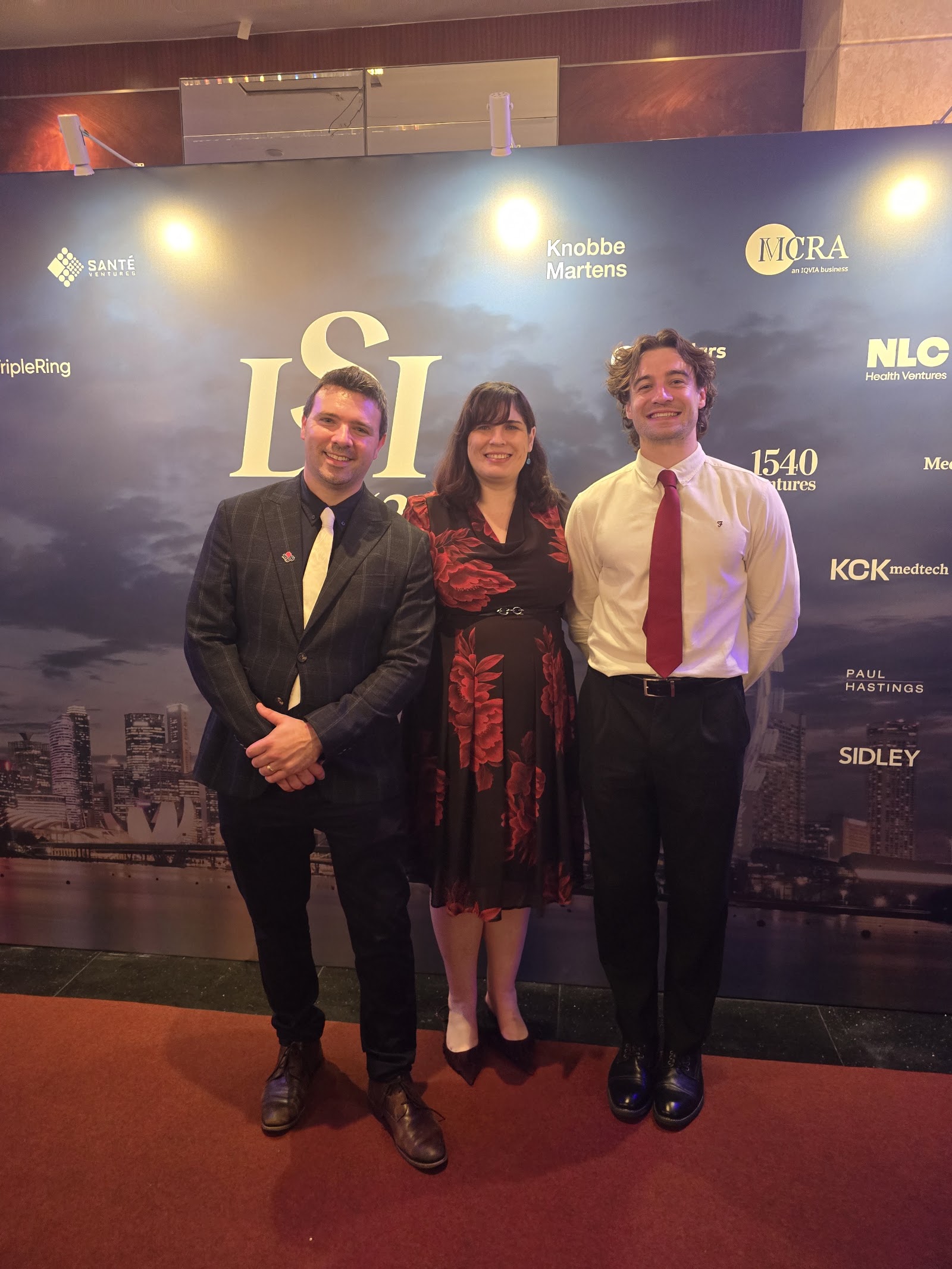
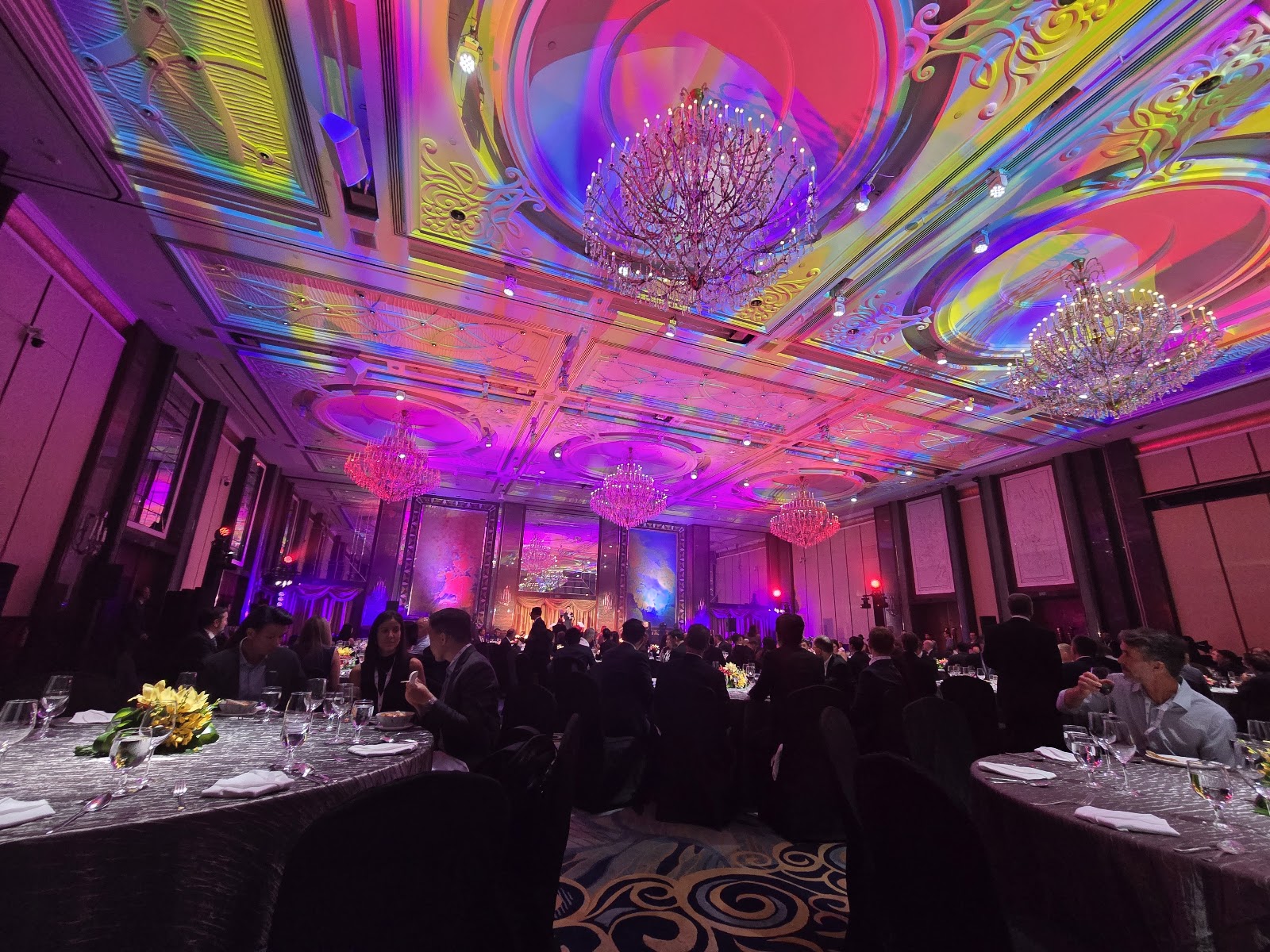
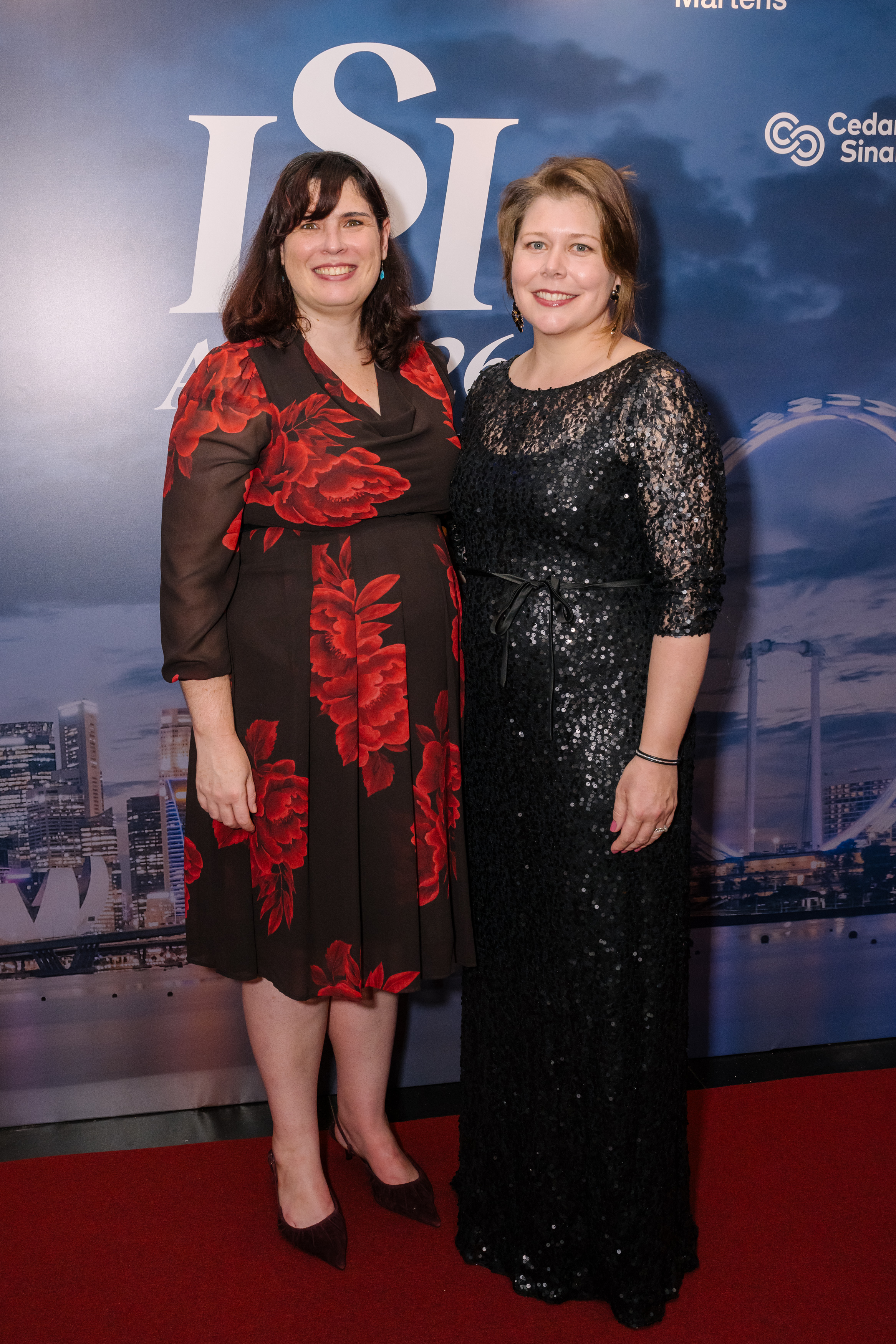
A big highlight of LSI Asia, as always, was the opening gala dinner. Michael, Carly and Davey dressed up and strutted their stuff in the beautiful gala hall.
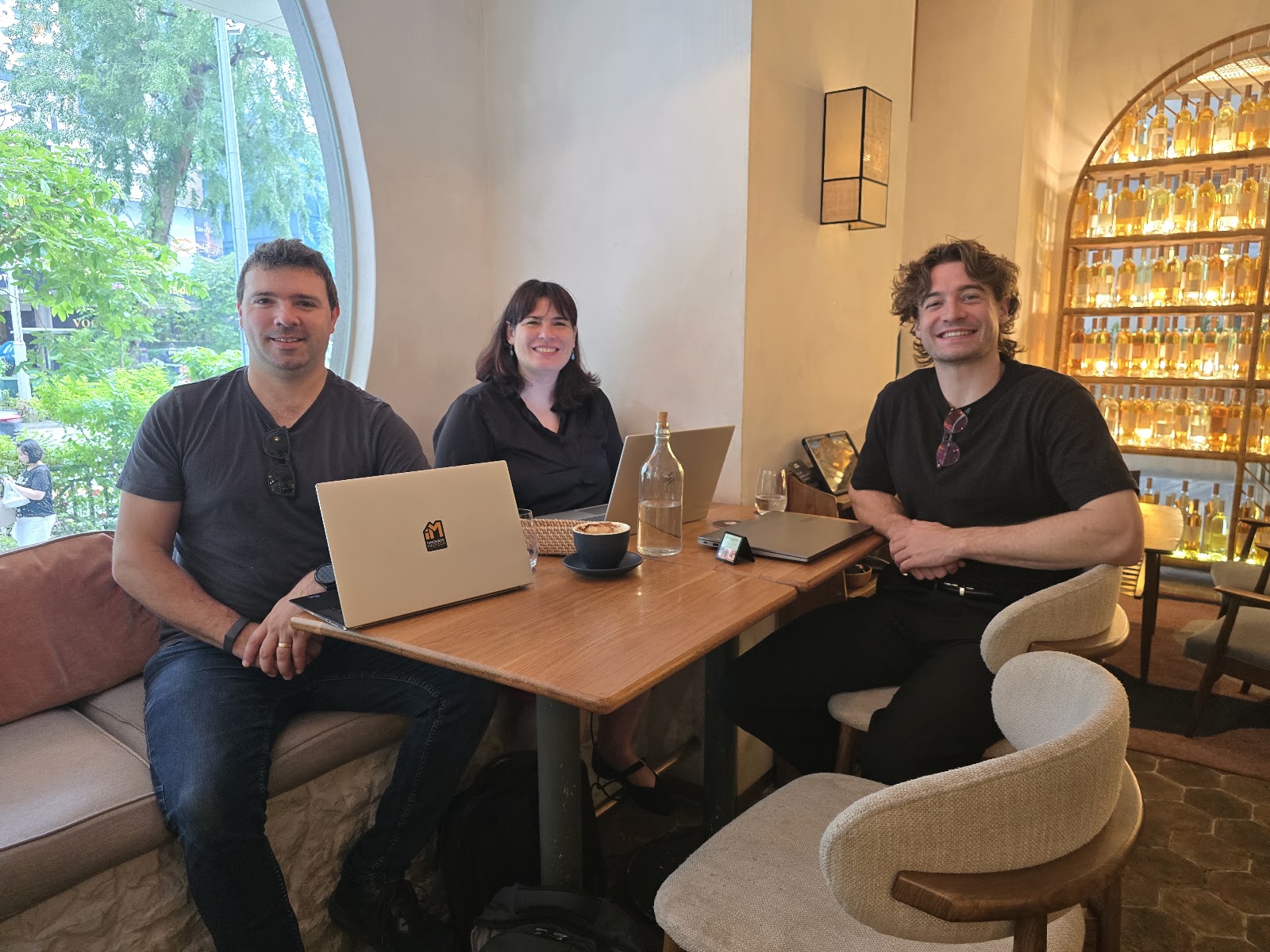
The conference also began with a quick pre-conference coffee in Singapore before the team headed into meetings, while Davey Kelly helped keep the Innovate Medtech booth running throughout LSI Asia.
WHAT’S NEXT
Our first Innovate Medtech booth may not sound like a major event in the grand scheme of global medtech, but it felt like a meaningful marker for us.
Innovate Medtech has grown from the lessons of one founder journey into a multidisciplinary medtech innovation and product development partner. We combine deep scientific and engineering expertise with practical founder experience to help medtech companies navigate complex decisions, overcome technical challenges and move confidently towards commercialisation. Our ambition is to be the trusted partner founders can rely on throughout their journey, while helping strengthen Australia’s medtech product development and manufacturing capabilities.
We also know there is no universal medtech playbook. Every company, clinical problem and technology brings a different combination of risks and decisions.
BUILDING A MEDTECH COMPANY?
If some of this sounds familiar, let’s talk about what your company needs next.
We help medtech founders turn difficult scientific, engineering and product-development challenges into a clear path forward.

